The Evolution of the book

The Evolution of the book

As books have now reached the 21st century with the creation of the increasingly popular e-book format, we thought it would be a good idea to take a look back at the long and involved history of the humble book.

From the clay tablets to the e-book format, the book has enjoyed a remarkable evolution, presented here is a snapshot of that history:

3500 BC – Symbols onto Tablets
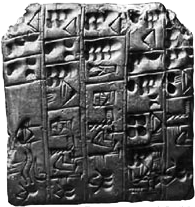
Sumarian Clay Tablet

Current understanding suggests that the very first attempts to transcribe symbols onto moveable materials were an ancient group of people known as Sumarians who lived in southern Mesopotamia around 3500 BC. Mesopotamia is an ancient name for the area in the middle east that stretches from the Zagros Mountains in the northeast to the spurs of the Anti-Taurus Mountains in the north west and the Persian Gulf in the south east to the Arabian Plateau in the south west.

The Sumarians devised a “cuneiform” alphabet (a system that consists of logophonetic, consonantal alphabetic and syllabic signs), the symbols of which were etched into clay tablets with a triangle shaped stylus called a “Calamus” and then allowed to dry or fired in a kiln to make them last as long as possible. The Sumarians are believed to be the first people to ever use the Cuneform script, which itself is the earliest known written system in the world.


2400 BC – Papyrus Scrolls
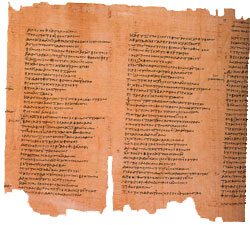
Papyrus Scrolls

The earliest surviving Papyrus scrolls that contain written words date back to around 2400 BC, originating in Egypt (The Fifth Dynasty of King Neferirkare Kakai), although it has suggested by historians that papyrus could have been used as early as the First Dynasty (3100 BC).

Papyrus is a very thick paper like material that is made from the “pith” (centre of the stem) of the papyrus plant, a reed like swamp plant that used to be found in abundance along the Nile river. This “pith” was cut into thin strips, pressed together and then glued and dried to form a thin flat surface that could be written on. Again a calamus cut from the stem of a reed and then sharpened was often used to scribe but bird feathers were also used.

Egyptians used this material for hundreds of years before the Greeks and Romans eventually adopted the technique. These scrolls were rolled up and often contained within wooden tubes to protect them and books were produced by glueing together a number of scrolls up to a length of 10 metres or in some cases even longer (The history of the Egyptian King Ramses III was over 40 metres long).

The Books were always rolled out horizontally and the text occupied on side, split into columns. This method of writing was used extensively until the 8th century AD.


600 BC – Standardised writing system developed

Around this time a general consensus of mediterranean cultures slowly emerged to form a more developed writing system. This favoured the left to right system that is now the standard in western cultures, although there is still a number of written scripts that use the right to left script, including Arabic and Hebrew.

Before this was decided many cultures wrote left to right, right to left, up to down and even down to up.


500 – 200 BC – Parchment
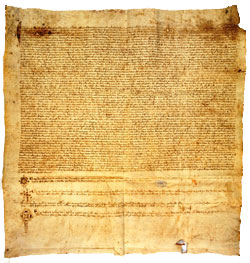
Parchment

Parchment, a thin material that is made from calfskin, sheepskin or even goatskin was first developed as a substitute to Papyrus. Herodotus, the Greek historian who lived in the 5th century BC (regarded as the “Father of History” in Western culture) described the use of skins to write on as common in his time. According to the Roman Varro (a scholar and writer who lived 116BC – 27BC) parchment was invented under the patronage of Eumenes of Pergamum (an ancient Greek city in modern-day Turkey) due to shortages of Papyrus.

Parchment itself derives it’s name from the city of Pergamon (the same Greek city as Pergamum) and it is known to have been perfected here. After a great library was setup in Pergamon (that rivalled the Library of Alexandria) prices began rising for the price of papyrus (partly due to the increasing scarcity of the papyrus reeds as it was overfarmed) leading to the adoption of parchment as the main writing material.

Parchment is distinct from leather in that it is limed (soaked in an Alkali solution which removed the hairs on the skin) but not tanned. As such parchment reacts with changes in humidity (being partly hydroscopic) and is not waterproof. The finer quality parchments are known as vellum and even in the modern age parchment has been called the “finest writing material ever devised” with even the most modern papers not reaching the quality of the finest vellum.


200 BC – Wax Tablets developed
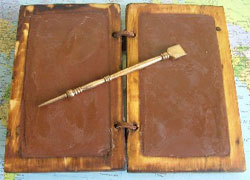
Wax Tablets developed

It was around this time that the wax tablets were developed by the Romans and Greeks. The tablets were essentially blocks of wood with were coated in wax allowing them to be written upon using a stylus, and later erased for re-use.

These tablets were sometimes joined together at one end with cords (like an early form of ring binder) to form a “codex” (original latin meaning “wood” but later known as a collection of bound pages), as such this is the earliest known form of a bound book. The “codex” became very popular around europe, replacing the scroll.


105 AD – The Paper Revolution

It is generally accepted that a chinese eunuch (attached to the imperial court) named Cai Lun invented papermaking for the intention of writing and used a combination of mulberries, bark, hemp, old rags and even used fish nets for the creation of the paper pulp, around 105 AD. Recent archaeological discoveries have been reported from near Dunhuang of paper with writing on it dating from 8 BC, while paper had been used in China for wrapping and padding since 200 BC.

The process of papermaking regardless of scale involves making a mixture of fibers in water to form a suspension and then allowing this suspension to drain through a screen so that a mat of fibers remains. This is then pressed and dried to make paper. After the paper is dry it is often run between heavy rollers to produce a harder writing surface (this process is known as calendering).

Paper can be “sized” to reduce the absorption of water and there are 3 categories – unsized (water-leaf) which is very absorbent and used for blotting and paper towels, weak sized (slack sized) which is still somewhat absorbent and used for newspapers and strong sized (hard sized) which offers good water resistance.

When paper was originally developed it was a fairly standard size and each peice of paper is known as a “leaf”. When a leaf is printed on without being folded it is refered to as a “folio” (which also means leaf) this size is roughly that of a small newspaper sheet (although folio can be other sizes). If this original folio is folded once to produce two leaves (or 4 pages) then the size of these leaves is refered to as a Quarto. If a Quarto is folded once to produce 4 leaves (or 8 pages) then this is known as a Octavo and is about the size of an average modern novel (there are also Sixteen-mo and even thirty-two-mo but this is less common).


400 – 600 AD – Illustrations added
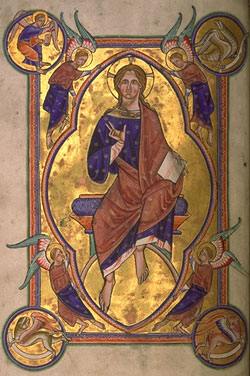
illuminated manuscripts

It was around this time that the first illustrated handwritten manuscripts (also known as illuminated manuscripts) appeared. These early manuscripts were still written on Parchment (which had replaced Papyrus) rather than the more “modern” paper due to the quality of Parchment over paper.

These handwritten books were decorated in silver or even gold with striking colours and very detailed designs.The earliest known examples of illustrated manuscripts originate from Italy and the eastern Roman Empire.

In Europe this became a very highly developed art form (as well as some Muslim countries) and this method of transcribing books prevailed until the invention of the moveable type.

The significance of these works lie not just in the artwork itself but also in the maintainence of the non illustrated works. Had this not been done (mainly by the monastic scribes of the Late Antiquity (a time that stretches from the 3rd to 7th centuries AD) then it is likely the entire collection of literature of Greece and Rome would have perished.


868 AD – The First Printed Book
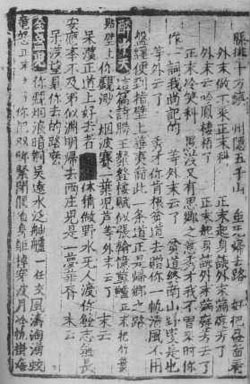
The First Printed Book

The very first book is printed on paper in China, using a block of wood that had characters carved in reverse relief. Ink was then placed on the block of wood to create a print on paper.

This technique is known as “block printing” or more accurately in this case “woodblock printing” and was originally used as early as 220 AD as a means of printing on cloth.

A block of wood is carefully prepared with a knife, chisel or sandpaper along the grain of the wood as a “relief matrix”, so that the raised areas are the black type. The content has to be created in reverse so that when printed it forms the mirror image. This process of carving the wood is known as Xylography.

Block printing could even be done in colour, by using multiple blocks (one block for each colour), although overprinting two colours can produce further colours on the print. Multiple colours can be printed by keying the paper to a frame around the woodblocks.


1041 AD – 1230 AD – The First Moveable Type
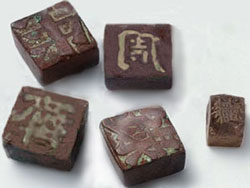
The First Moveable Type

Moveable type is the system of printing and typography that uses movable components to reproduce the elements of a document (usually individual letters or punctuation).

A Chinese man called Bi Sheng came up with the very first moveable type, with each letter created from wooden pieces (tablets) and then placed onto a wooden board. This wooden method was not without it’s problems however, the most serious of these being the ink soaking into the wood and creating an uneven surface. As a result of these issues wooden moveable type was quickly abandoned and replaced with ceramic tablets, which were made from baked clay.

Due to the complexities of the chinese written language (there had to be thousands of ceramic tablets) moveable type didn’t really catch on for quite some time in the east.

Around 1230 AD the very first metal moveable type was created, this time in Korea during the Goryeo Dynasty. This breakthrough led eventually the the very first movable metal print book in 1377 AD called the “Jikji”.


1250 AD – Block Printing in Egypt

Block printing (called Tarsh in Arabic) arrived in Egypt around this time, although it is unclear if this was developed separately or influenced by the block printing already in use in Asia (although Arabic chronicles confirm that paper making in Egypt was developed from Central Asia). This block printing method appears to be almost exclusively used by the Muslim community.

Most surviving extant prints suggest that block printing was mainly restricted to religious texts such as amulets (long thin strips of paper bearing quotes from the Quran, listing the names of God and other texts designed to ward off evil). These “amulets” were rolled into metal tubes and worn around the neck on a chain.

It is unknown why block printing never developed within Egypt, or the Muslim community but it is thought that this may be due to the fact that Tarsh was used by Itinerant tinners, rogue scribes (such as Abu Dulaf al-Khazraji who frenquented the courts of Iranian Buyid princes and has written of the Tarsh process) and other confidence men who could take advantage of the piety of the gullible masses. This would explain it’s insulation from the rest of society and why the technology was never expanded upon.


1439 – 1450 AD – Moveable Type in Europe
Moveable Type in Europe

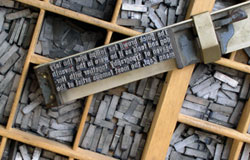
The very first moveable type is developed in Europe by a German goldsmith by the name of Johannes Gutenberg (full name Johannes Gensfleisch zur Laden zum Gutenberg), who is known to have developed this technology independantly of the moveable type system in use in Asia.

Already familiar with the technique of cutting punches for coins and moulds, Johannes developed a metal moveable type system of casting letters from matrices using a device called a hand mould (a very simple two part mould which contains the hand-made moveable type). The matrix itself was produced from a lead alloy (known as type metal) which was discovered by Johannes himself. This alloy allowed for more durable and uniform lettering which eventually gave rise to typography and fonts.

The hand mould was the very first practical method of producing cheap copies of letterpunches in the vast quantities required for printing of the average book. This made moveable type a viable business and this is seen as truly monumental invention that has revolutionised the writing and printing of information and led directly to the printing press.

This is widely regarded as the most important event of the modern period and played a key role in the development of the Renaissance, Reformation and the Scientific Revolution while at the same time spreading a means of learning to the masses and forming the basis for the modern knowledge-based economy we see today. Practically all moveable type printing derives from Gutenberg’s metal alloy moveable type, often regarded as the most important invention of the second millennium.


1455 AD – The Guttenburg Bible
The Guttenburg Bible

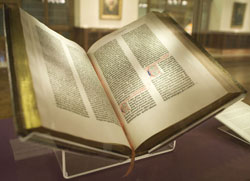
The invention of moveable type in Europe by Johannes Gutenberg led directly to his major work, the creation of the Gutenberg Bible (also known as the 42-line Bible, the Mazarin Bible or the B42). This was the very first major book to be printed using Gutenberg’s new moveable type printing press and marked the start of the Gutenberg Revolution and the dawn of the printed book.

The Gutenberg Bible has an iconic status in the western world and has been widely hailed for it’s high artistic and aesthetic qualities. There are thought to be 21 complete copies still in existence and are considered to be the most expensive books if they were ever to go on sale.

Gutenberg made 3 very significant changes during the print process for the Bible, the first change was “Rubication” (a process that involved adding additional text in red for headings, a starting character or annotations) of the pages by being passed twice through the press, with the second pass being made in red.

This process was soon abandoned with spaces being left for the Rubication to be added by hand. Some time after this the number of lines were increased from 40 to 42, most likely to save on paper. As a result pages 1-9 and pages 256 to 265 have 40 lines (being the first ones printed), page 10 has 41 lines and the remaining pages all have 42 lines.

The third change was to increase the print run which meant that those pages that had already been printed had to be reset. All new sheets used the new default of 42 lines. As a result there are two disctinct settings in the folios 1-32 and 129-158 of volume I and folios 1-16 and 162 of volume II.

The Bible is printed in what is now called the “blackletter” type styles of Gothic Bookhand (Textualis) and Schwabacher and followed the technique of justification. These books left the workshop unillustrated, unbound and mostly un-rubicated. A guide was produced for the Rubicators to add text and a generous margin was left for illustrators although some copies were left unillustrated.

It is believed that in total 180 copies of the Gutenberg Bible were created, 135 on paper and a further 45 on vellum. Of these it is known that 21 exist in complete condition while there are a further 26 or 27 copies that are incomplete. Of these 12 are on velum, but only 4 complete (one in France, one in Germany, one in the British Library and the last in the Library of Congress, USA).

After Gutenberg produced his Bible he fought and lost a lawsuit against his investor Johann Fust, who put Peter Schoffer (Gutenberg Employee) in charge of the print shop. Gutenberg himself started a new print company but the monopoly over the technology was lost and thus began the endemic spread of print presses throughout Germany and the rest of the world.


1490 AD – 1500 AD -The Printing Revolution

Gutenberg’s invention of mechanical moveable type (printing press) led to a mass revolution of printing activities and by the end of the 15th century printing had spread to no less than 236 countries in Europe, with more than 20 million books produced. From this time onwards it is generally assumed that the printed book was in universal use throughout Europe.

This rapid expansion and sharp fall in production costs took everyone by surprise, created the very first “bestsellers”, the very first Newspaper and a whole new branch of media with the publishing press.

This print revolution was not simply limited to Europe, the nearly simultaneous discovery of sea routes to the West by Christopher Columbus in 1492 and routes to the East in 1498 by Vasco da Gama allowed trade links to be established and meant Gutenberg’s press spread to the rest of the world.


1501 AD – The Precurser to the Modern Paperback
The Precurser to the Modern Paperback

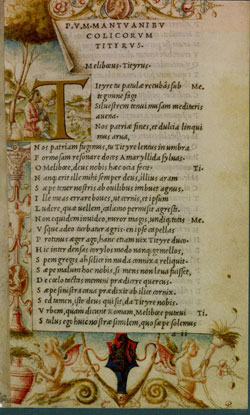
As the printing revolution gathered pace, many improvements were made to both the printing method, and the typeface. Aldus Manutius (Aldo Manuzio il Vecchio in italian) was an Italian humanist who founded the Aldine press in Venice. Aldus has the distinction of inventing italic type, establishing the modern use of the semicolon and most importantly, introducing inexpensive small format books (octavos) which were bound in vellum and were read much like the modern paperback.

It was Aldus’s desire to secure Greece’s rich literature from any further loss that encouraged him to adopt the small book format.He invented the pocket book editions of the classics in Greek and Latin so that all could own and read these books but also gentlemen of leisure could easily transport in a pocket or a satchel. To this end he introduced the italic type, which was not used for emphasis as it is today but for his pocket books due to the narrow and compact letter forms. The very first book to be printed in this new pocket book format was Virgil’s “Opera” (P. Vergili Maronis Opera) in 1501 AD.


1639 AD – 1640 AD – America’s First Book
America's First Book

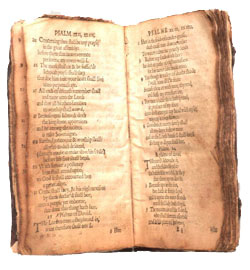
Puritans arrive in the new land of opportunity and they bring with them North America’s very first printing press. This press was specifically transported to print America’s very first book, “the Bay Psalm” which was published at Cambridge, Massachusetts in 1640 AD. The Bay Psalm is essentially a “psalter”, a volume containing the book of Psalms (150 sacred poems from the Hebrew Bible, which are sung), translated into English. There are Eleven copies of this first edition known to still exist and David Baldacci’s 2006 novel “The Collectors” considers the discovery of a twelfth complete copy.

At the time of printing there were 13 British colonies and it is a mark of their desire to consider themselves an “advanced civilisation” that this press arrived and the book printed just 20 years after the Mayflower arrived at Plymouth Rock and with it the very first British Colonists.


1744 AD – The Discovery of Chlorine

While the most common compound of Chlorine, sodium chloride (salt) has been used since at least 3000 BC (Brine even as early as 6000 BC), the discovery of the Chlorine element wasn’t discovered until 1744 AD by the Swedish chemist Carl Wilhelm Scheele. Scheele observed the gas produced by the reaction of Hydrochloric Acid (known as Muriatic acid at the time) and Manganese Dioxide. Although Scheele is credited with the discovery, it was the British chemist (also an Inventor) Sir Humphry Davy who actually gave the element it’s current name.

So why is this element appearing in the history of the book? Chlorine is used in the bleaching of paper and without this discovery the modern paper would not have that nice clean white look.


1832 AD – Book sleeves appear

1832 AD marks the very first books to be covered in printed detachable paper jackets, with the very first book covered this was is believed to be “The Keepsake”, an “annual” (later known just as “the Annual”) of stories written primarily by Walter Scott and produced by Charles Heath.

This book jacket design remained relatively unchanged for the following 60 years until the first 2 decades of the twentieth century brought new designs and ideas.


1832 AD to 1860 AD – Birth of the “cheap” Novel
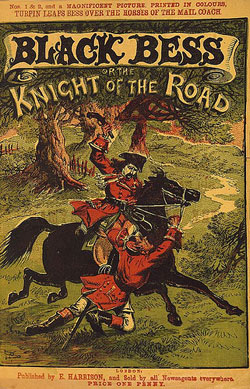
Birth of the cheap Novel

With the continued spread of the written word, along with a growth in education and the continued reduction in print costs, the first mass-market paperbacks were born. In Britain there were two distinct markets these mass publications were aimed at, the juvenile market with the “story papers” and the working class adult which were known as a “penny dreadful”, “penny number” or a “penny blood” – due to the fact that they each cost a “penny”. Eventually these novels were exclusively aimed at the working class youth market and the term story paper became interchangeable with penny dreadful.

These stories were printed on cheap “pulp” paper and featured reprints or rewrites of stories, largely in the Gothic thriller or Crime genre including the tales of Sweeney Todd and Varney the Vampire. One of the most popular of these series was “Black Bess or the Knight of the Road” which ran for an impressive 254 episodes and featured fictional events of the real life Highwayman Dick Turpin.

Even as far back as the late 1800’s America began to influence the British culture with many of their version of pulp stories being published in England. A good number of these proved remarkably popular with largely wild west tales such as “Deadwood Dick” and “Buffalo Bill” delighting the penny dreadful audience, thus began for many the love affair with the largely fictional wild west and “cowboys and indians” tales.

Those working class boys who could not afford a penny a week often teamed up with friends to form reading clubs and share the cost. Some of the more entrepreneurial of boys would even rent their copies out to others.
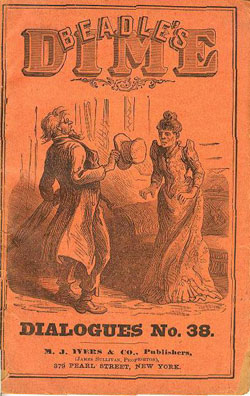
Beadles dime novels

In America these pulp novels were known as “Dime Novels” and are thought to have begun with Beadle & Adams “Beadle’s Dime” Novel series in 1860 AD, the first book of which was “Maleaska, the Indian Wife of the White Hunter” (written by Ann S. Stephens). The Beadles Dime series ran for 321 issues and established nearly all the conventions of the genre. Much of the material for dime novels came from the weekly story papers which were newspaper like publications varying from tabloid to full broadsheet in size. By the 1880’s re-occuring characters began to appear, like Frank Reade (a detective and first ever character to be called “sleuth”) which began the end of the trend for the wild west stories that had so far held sway and made way for the hugely popular detective novel.

In the modern age the term “dime novel” is generally used to describe a sensationalized yet superficial piece of written work. Without the penny dreadfuls and the dime novels we would likely have never seen the mass market paperback that has become so widely used in the 20th and 21st Century.


1920 AD – 1938 AD – The fall and rise of the Paperback
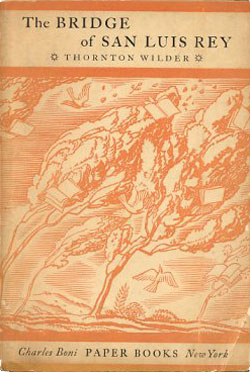
The fall and rise of the Paperback

By the start of the 20th Century the hardback book was a common site and those hardback publishers considered paperback books to contain lower quality or trashy content and that these pulp novels would not appeal to their market audience. In the early 1920’s this was even proved in the US market after a test was run by the release of Gertrude Atherton’s “Sisters-in-Law” novel which was simultaneously released in both hardback (for $2) and paperback (for $1.5). The result was that the hardback outsold the paperback by a ratio of 54 to 1, and of those paperbacks sold, the majority were bought by 1 dealer hoping to get rich (which he didn’t). Other similar experiments had the same results.

There was however one publisher who did have a great deal of success with the paperback format, even though he was not exactly “mainstream” in publishing and advertising. The publisher was an American eccentric called Emanuel Haldemann-Julius who took out newspaper adverts for his “University in Print” series of mini-mini books which were wrapped in paper and cost only three cents each. A standard blue cover was used, the series named “the little blue books” and the orders went through the roof. In the first year alone (1921) he sold over 31 Million little blue books!. By 1925 Publisher’s Weekly proclaimed him “the greatest publishing house in history” but due to his atheism and communist views along with very poor publishing standards and his unethical advertising methods he never became mainstream.

Meanwhile the Boni Brothers who had founded the Modern Library (which eventually became Random House, the largest publishers in the world) had been watching these publishers and learning from their mistakes. They realised that all these paperback revolutions had their greatest success from their mail orders, not those books sold in stores. As a result of this research they launched “Charles Boni Paper Books” which was a mail order book club and for the yearly subscription charge of $5 their members would receive periodic mailings of high quality literature in paper back form. To add appeal to the mainstream market, and give an air of prestige to the books each one was illustrated by a renowned artist such as Noman Rockwell and Rockwell Kent. Unfortunately the year the Boni Brothers started their venture (1929) was the same year of the massive wall street crash and their business was doomed. Their influence however would be widespread with the eventual proliferation of the book club and the further popularisation of the paperback form.


1933 AD Nazis begin burning books

10th May 1933 marked the beginning of the burning of books by the Nazi regime in an effort to control the German history, culture, belief and ideology to fit with that of the Nazi parties goals. The Nazi Minister for “Popular Enlightenment and Propaganda”, Joseph Goebbels led the effort to purge any unwanted information including organizations of Jewish and other officials who the Nazi’s suspected to be politically suspect or who worked outside of the Nazi ideals. Goebbels has the support of the National Socialist German Students’ Association and many students made up the vanguard of the early Nazi movement.

On the 10th of May German students marked the beginnings of state censorship with the burning of over 25,000 volumes of “un-German” books and throughout the country right-wing students marched in torchlight parades “against the un-German spirit.” In a real sense of irony, among those works burned that night were the writings of the nineteenth-century German Jewish poet Heinrich Heine, who wrote in his 1820-1821 play Almansor the famous admonition, “Dort, wo man Bücher verbrennt, verbrennt man am Ende auch Menschen”: “Where they burn books, they will also ultimately burn people.”


1935 AD – 1945 AD – The March of the Penguin

The March of the Penguin

1935 saw the very first Penguin paperbacks published, founded by Sir Allen Lane which began life as an imprint of the publishers Bodley Head. The general perception of paperback books however was still on of lurid and poor quality content, and the low price that they sold for (hindering profit margins) did not appeal to Bodley Head. This enabled Lane to purchase the publication rights for a number of works for much less than he would have otherwise.

Rather than choosing the “low brow” works, Lane purchased the rights to 10 “high class” titles which he intended to print in the paperback format. Given the perception of the market this was a massive gamble, and even riskier he ordered huge print runs of 20 000 copies at a time to keep costs down. These risks paid off though, the high street chain Woolworths purchased 63000 penguin books and within 2 days they had sold out, this allowed Lane to establish Penguin as a seperate business by 1936.

By March of the same year, only ten months after it was founded, Penguin had printed over 1 million books. Part of Lane’s success lie in his design and branding of the books in order to appeal to the mainstream market. Rather than bright, garish or gaudy designs, the Penguin books were designed with 3 simple stripes, with the upper and lower stripe colour denoting which series the book belonged to and the middle stripe kept white. In this center stripe was printed the book title and author name while the upper stripe held the Penguin logo.

1937 brought Penguin’s first imprint, Pelican books which were designed to educate the reading public rather than entertain. The second world war did not effect Penguin as much as other publishers and by 1940 another imprint was launched, this time aimed at the children’s market. Continuing with the bird theme, this new imprint was named Puffin books. For the first year Puffin books printed only non-fiction titles but in 1941 they started publishing fiction, the first novel of which was Barbara Euphan Todd’s “Worzel Gummidge”.

In 1945 Penguin created what could be considered it’s most important, and successful imprint with Penguin Classics which began with a translation of the seminal work – Homer’s Odyssey. This success and steady stream of innovation coupled with Lanes ability to judge the market trends was influential in ensuring the success of the humble paperback and it wasn’t long before Penguin gained competition.


1971 – AD – The first microprocessor invented

While computers had been around in some form before 1971, it was this date that the very first commercial microprocessor became available in the Intel 4004 although there were actually 3 companies to produce a microprocessor all about the same time with Texas Instruments TMS 1000 and Garrett AiResearch’s CADC. These breakthroughs in computer design would ultimately lead to the technological revolution we are currently a part of and enable the digitisation of the book.


1985 AD – First books on CD

In 1985 one of the USA’s largest publishers of encyclopedias published a text only version of the Academic American Encyclopedia, which they re-named “The New Grolier Electronic Encyclopedia”. This has the distinction of being the very first book to be published on a CD. Since this time a number of books have been published on this media but by far the most popular use for this format has been the audio book (which were actually published on cassette tape before CD’s were available).


1989 AD – Internet and HTML arrive for public use

While the term “internet” was first coined way back in 1974 after publication of the first specification for the TCP protocol, it wasn’t until 1991 that the internet become commercially available. The very first commercial ISP (offering dial-up access) was first formed in 1989, in the USA. 1989 also marks the creation of the World Wide Web (WWW) by Tim Berners-Lee and team at CERN in an effort to make it easier to publish information on the Internet


1995 AD – Books sold Online

Books sold Online

The very first online bookseller, Amazon is launched by Jeff Bezos in 1995 offering a wide choice of books to buy online. Bezos’ idea was to create an online bookstore that was not limited to the volume offered by traditional book shops or even mail order books. The very first book sold online by Amazon: “Fluid Concepts and Creative Analogies: Computer Models of the Fundamental Mechanisms of Thought” which goes someway to showing what the online shopping demographic was like back in 1995.

Amazon proved an almost overnight success which was partly due to it’s unusual business plan that included not planning to make profit for the first 4 to 5 years. While other internet companies grew blindingly fast, Amazon’s slow but steady growth caused some concern for it’s stock-holders however when the dot-com bubble burst, this business plan meant that it survived where many others crashed and burned. Originally selling only books, Amazon expanded into Music and film and can now be seen to offer a massive range of products and services.

Incidentally, if you look at Amazon’s logo on the left you will notice an arrow pointing from the a to the z of the logo and this represents Amazon’s desire to offer “everything from A to Z”.

Amazon is widely acknowledged as leading a revolution in online shopping and e-commerce itself. A survey carried out in 2009 and published by Verdict Research showed that Amazon is the UK’s favorite music and Video retailer while in the US Amazon is second only to Walmart amongst retailers in market value.


1996 AD – Google is Born

The Internet Search giant Google began life as a research project by co-founders Larry Page and Sergey Brin who were students at the Stanford University in California. Page and Brin were working on a research project that was supported by the Digital Library Technology Project. Thier ultimate goal was to make digital Libraries work with a vision of the future in which vast collections of books are available digitally and people would use some form of “web crawler” to index the book’s content and analyze the connections between them, allowing a determination of any given books relevance and use by tracking the number and quality of citations from other books.

The result of their efforts was BackRub, a modern twist on the traditional citation analysis and the fore-runner to Google’s PageRank algorithm.

In 2002 Google officially launched it’s “book” project, and they began to ask experts and gain research into just how long it would take to scan the world’s books. The answer was unclear but it didn’t stop Page and Brin from developing their idea and before long books were being digitized at a tremendous rate.


2000 AD – 2006 AD The start of the e-books Market

The very first e-books were produced way back in the early 1970’s by the Gutenberg Project (a volunteer led effort to digitize and archive cultural works, mostly Public Domain books) however it wasn’t until the turn of the 21st century that this format become generally available and accepted as a publishing format. This was led by a novella by Stephen King called “Riding the Bullet” which became the very first mass-market electonic book, published in 2000 AD. Within the first 24 hours of release, the novella sold over 400 000 electronic copies which broke the publishers servers and led to fans having to wait for hours before they could download a copy.

Despite this success, the e-format was not seen as commercially viable by most publishers at first, not helped by a lack of any standards and portable reader technology.


2007 AD – The Kindle becomes the first e-book reader
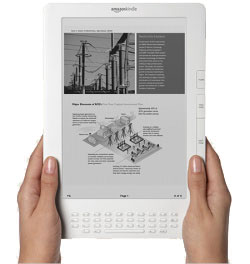
The Kindle becomes the first e-book reader

Amazon release the first ever dedicated e-book reader on November 19, 2007 which they name the Kindle. Available only in the US, the Kindle sold out within 5 1/2 hours and remained out of stock until late April 2008. The first generation of Kindle featured a 6″ screen with a 4 level greyscale display and 250MB of storage (enough space for about 200 non-illustrated titles) and had a slot for an SD memory card.

On the 23rd February 2009 the second generation of Kindle was released, again only in the US. The Kindle 2 featured the same size screen but in 16 grayscale shades, an improved battery, faster page refreshing, a text to speech and read aloud facility and 2GB of memory (allowing an estimated 1500 non-illustrated e-books to be stored) however the SD Memory slot was removed so no memory expansion was available.

On the 19th October 2009 a version of the Kindle 2 was made available in over 100 countries, including the UK. The International version of the Kindle 2 is almost the same as it’s US counterpart with the only real difference being a different mobile network standard based on AT&T in the US, 3G, EDGE and GPRS in the rest of the world.

Since the Kindle launched there have been a number of e-book readers released from a variety of companies including Sony with their “PRS-500” and PRS-505 readers, the latter of which was the only e-reader available in the UK for some time. Other companies include Barnes & Noble with their “nook”, Iriver with their “story” and IRex Technologies with the “Iliad” to name jus a few. This huge support for the e-book format, which has been widely supported by most publishers has meant that the e-book now sells in large volumes, it has even been predicted by Sony that e-books will outsell the paper format by 2015.

One distinct advantage of this new format is that it allows those new, unheard of and self publishing authors to distribute their works with very little cost. At present though the only thing holding back the e-book is that some see the format as a way to increase profit margins rather than lower the cost of ownership and as such it is actually possible to purchase some novels in paper formats for less than the electronic formats. This is of course also held up with the huge second hand book trade which enables a reader to aquire novels at a very low cost.


2008 AD – Speeding up the scanning of Books

Devices suchg as BookSnap – a digital book scanning system that enables very fast, high quality digital scanning of books – is helping to digitise the world that much quicker. This whole digitisation movement is still headed by the goliath Google but many publishers are now beginning to offer older, out out of print works in digital format for the first time. Gollancz is leading the way in this regard with SF Gateway – a place that offers thousands of SF Classics in digital formats.

2014 AD and Beyond

2010 AD and Beyond

It’s difficult to predict just what direction the book will ultimately take, there is no doubt that Tablets, Smart-phones and E-readers have become very popular. A side-effect of this has been a big surge in Audible books with sites such as Audible allowing a digital download onto tablet, smartphone and most e-readers.

We have still yet to see the promised ultra thin, flexible e-reader that can be rolled up and stuck in a pocket, but I imagine that this is not too far away.

The ability to purchase, download and read a book almost instantly is a difficult one to resist. In addition the capability to literally carry your library of 1000’s of books in your hand or even pocket is quite incredible. As the distribution of the first printing presses led to a reading revolution for the masses, the distribution of the e-book has the potential to help educate those in third world countries and provide access for a huge range of literature.

If we look far enough into the future maybe we will see William Gibsons ideas come to life where vast libraries of information are stored directly in our brains and we can access the literature of the ages just by thought.

I personally believe however that the whole tactile and sensory experience that the paper format offers is one that is with us to stay and it’s really up to us as the consumer as to just what ratio of electronic to traditional format will ultimately work.

So far this is indeed proving true, many people are still buying paper books and recently there has been a new lease of life for independent bookshops. Like video failed to kill the radio star, so it appears that solid, paper books are here to stay.

Advertisment
news-1701

yakinjp

yakinjp

rtp yakinjp

yakinjp

yakinjp

yakin jp

yakinjp id

maujp

maujp

maujp

\

sabung ayam online

sabung ayam online

SLOT MAHJONG

sabung ayam online

invoice 00001

invoice 00002

invoice 00003

invoice 00004

invoice 00005

invoice 00006

invoice 00007

invoice 00008

invoice 00009

invoice 00010

invoice 00011

invoice 00012

invoice 00013

invoice 00014

invoice 00015

invoice 00016

invoice 00017

invoice 00018

invoice 00019

invoice 00020

invoice 00021

invoice 00022

invoice 00023

invoice 00024

invoice 00025

invoice 00026

invoice 00027

invoice 00028

invoice 00029

invoice 00030

article 2000001

article 2000002

article 2000003

article 2000004

article 2000005

article 2000006

article 2000007

article 2000008

article 2000009

article 2000010

article 2000011

article 2000012

article 2000013

article 2000014

article 2000015

article 2000016

article 2000017

article 2000018

article 2000019

article 2000020

article 2000021

article 2000022

article 2000023

article 2000024

article 2000025

article 2000026

article 2000027

article 2000028

article 2000029

article 2000030

pusdataru 00001

pusdataru 00002

pusdataru 00003

pusdataru 00004

pusdataru 00005

pusdataru 00006

pusdataru 00007

pusdataru 00008

pusdataru 00009

pusdataru 00010

pusdataru 00011

pusdataru 00012

pusdataru 00013

pusdataru 00014

pusdataru 00015

pusdataru 00016

pusdataru 00017

pusdataru 00018

pusdataru 00019

pusdataru 00020

pusdataru 00021

pusdataru 00022

pusdataru 00023

pusdataru 00024

pusdataru 00025

pusdataru 00026

pusdataru 00027

pusdataru 00028

pusdataru 00029

pusdataru 00030

article 00000001

article 00000002

article 00000003

article 00000004

article 00000005

article 00000006

article 00000007

article 00000008

article 00000009

article 00000010

article 00000011

article 00000012

article 00000013

article 00000014

article 00000015

article 00000016

article 00000017

article 00000018

article 00000019

article 00000020

article 00000021

article 00000022

article 00000023

article 00000024

article 00000025

article 00000026

article 00000027

article 00000028

article 00000029

article 00000030

pemohonan 000001

pemohonan 000002

pemohonan 000003

pemohonan 000004

pemohonan 000005

pemohonan 000006

pemohonan 000007

pemohonan 000008

pemohonan 000009

pemohonan 000010

pemohonan 000011

pemohonan 000012

pemohonan 000013

pemohonan 000014

pemohonan 000015

pemohonan 000016

pemohonan 000017

pemohonan 000018

pemohonan 000019

pemohonan 000020

pemohonan 000021

pemohonan 000022

pemohonan 000023

pemohonan 000024

pemohonan 000025

pemohonan 000026

pemohonan 000027

pemohonan 000028

pemohonan 000029

pemohonan 000030

artikel 000000061

artikel 000000062

artikel 000000063

artikel 000000064

artikel 000000065

artikel 000000066

artikel 000000067

artikel 000000068

artikel 000000069

artikel 000000070

artikel 000000071

artikel 000000072

artikel 000000073

artikel 000000074

artikel 000000075

artikel 000000076

artikel 000000077

artikel 000000078

artikel 000000079

artikel 000000080

artikel 000000081

artikel 000000082

artikel 000000083

artikel 000000084

artikel 000000085

artikel 000000086

artikel 000000087

artikel 000000088

artikel 000000089

artikel 000000090

pengadilan 000031

pengadilan 000032

pengadilan 000033

pengadilan 000034

pengadilan 000035

pengadilan 000036

pengadilan 000037

pengadilan 000038

pengadilan 000039

pengadilan 000040

pengadilan 000041

pengadilan 000042

pengadilan 000043

pengadilan 000044

pengadilan 000045

pengadilan 000046

pengadilan 000047

pengadilan 000048

pengadilan 000049

pengadilan 000050

pengadilan 000051

pengadilan 000052

pengadilan 000053

pengadilan 000054

pengadilan 000055

pengadilan 000056

pengadilan 000057

pengadilan 000058

pengadilan 000059

pengadilan 000060

pengadilan 000061

pengadilan 000062

pengadilan 000063

pengadilan 000064

pengadilan 000065

pengadilan 000066

pengadilan 000067

pengadilan 000068

pengadilan 000069

pengadilan 000070

pengadilan 000071

pengadilan 000072

pengadilan 000073

pengadilan 000074

pengadilan 000075

pengadilan 000076

pengadilan 000077

pengadilan 000078

pengadilan 000079

pengadilan 000080

sport 00011

sport 00012

sport 00013

sport 00014

sport 00015

sport 00016

sport 00017

sport 00018

sport 00019

sport 00020

sport 00021

sport 00022

sport 00023

sport 00024

sport 00025

sport 00026

sport 00027

sport 00028

sport 00029

sport 00030

sport 00031

sport 00032

sport 00033

sport 00034

sport 00035

perkara 0000031

perkara 0000032

perkara 0000033

perkara 0000034

perkara 0000035

perkara 0000036

perkara 0000037

perkara 0000038

perkara 0000039

perkara 0000040

perkara 0000041

perkara 0000042

perkara 0000043

perkara 0000044

perkara 0000045

perkara 0000046

perkara 0000047

perkara 0000048

perkara 0000049

perkara 0000050

perkara 0000051

perkara 0000052

perkara 0000053

perkara 0000054

perkara 0000055

perkara 0000056

perkara 0000057

perkara 0000058

perkara 0000059

perkara 0000060

perkara 0000061

perkara 0000062

perkara 0000063

perkara 0000064

perkara 0000065

perkara 0000066

perkara 0000067

perkara 0000068

perkara 0000069

perkara 0000070

perkara 0000071

perkara 0000072

perkara 0000073

perkara 0000074

perkara 0000075

perkara 0000076

perkara 0000077

perkara 0000078

perkara 0000079

perkara 0000080

news-1701
news-1701

yakinjp

yakinjp

rtp yakinjp

yakinjp

yakinjp

yakin jp

yakinjp id

maujp

maujp

maujp

\

sabung ayam online

sabung ayam online

SLOT MAHJONG

sabung ayam online

invoice 00001

invoice 00002

invoice 00003

invoice 00004

invoice 00005

invoice 00006

invoice 00007

invoice 00008

invoice 00009

invoice 00010

invoice 00011

invoice 00012

invoice 00013

invoice 00014

invoice 00015

invoice 00016

invoice 00017

invoice 00018

invoice 00019

invoice 00020

invoice 00021

invoice 00022

invoice 00023

invoice 00024

invoice 00025

invoice 00026

invoice 00027

invoice 00028

invoice 00029

invoice 00030

article 2000001

article 2000002

article 2000003

article 2000004

article 2000005

article 2000006

article 2000007

article 2000008

article 2000009

article 2000010

article 2000011

article 2000012

article 2000013

article 2000014

article 2000015

article 2000016

article 2000017

article 2000018

article 2000019

article 2000020

article 2000021

article 2000022

article 2000023

article 2000024

article 2000025

article 2000026

article 2000027

article 2000028

article 2000029

article 2000030

pusdataru 00001

pusdataru 00002

pusdataru 00003

pusdataru 00004

pusdataru 00005

pusdataru 00006

pusdataru 00007

pusdataru 00008

pusdataru 00009

pusdataru 00010

pusdataru 00011

pusdataru 00012

pusdataru 00013

pusdataru 00014

pusdataru 00015

pusdataru 00016

pusdataru 00017

pusdataru 00018

pusdataru 00019

pusdataru 00020

pusdataru 00021

pusdataru 00022

pusdataru 00023

pusdataru 00024

pusdataru 00025

pusdataru 00026

pusdataru 00027

pusdataru 00028

pusdataru 00029

pusdataru 00030

article 00000001

article 00000002

article 00000003

article 00000004

article 00000005

article 00000006

article 00000007

article 00000008

article 00000009

article 00000010

article 00000011

article 00000012

article 00000013

article 00000014

article 00000015

article 00000016

article 00000017

article 00000018

article 00000019

article 00000020

article 00000021

article 00000022

article 00000023

article 00000024

article 00000025

article 00000026

article 00000027

article 00000028

article 00000029

article 00000030

pemohonan 000001

pemohonan 000002

pemohonan 000003

pemohonan 000004

pemohonan 000005

pemohonan 000006

pemohonan 000007

pemohonan 000008

pemohonan 000009

pemohonan 000010

pemohonan 000011

pemohonan 000012

pemohonan 000013

pemohonan 000014

pemohonan 000015

pemohonan 000016

pemohonan 000017

pemohonan 000018

pemohonan 000019

pemohonan 000020

pemohonan 000021

pemohonan 000022

pemohonan 000023

pemohonan 000024

pemohonan 000025

pemohonan 000026

pemohonan 000027

pemohonan 000028

pemohonan 000029

pemohonan 000030

artikel 000000061

artikel 000000062

artikel 000000063

artikel 000000064

artikel 000000065

artikel 000000066

artikel 000000067

artikel 000000068

artikel 000000069

artikel 000000070

artikel 000000071

artikel 000000072

artikel 000000073

artikel 000000074

artikel 000000075

artikel 000000076

artikel 000000077

artikel 000000078

artikel 000000079

artikel 000000080

artikel 000000081

artikel 000000082

artikel 000000083

artikel 000000084

artikel 000000085

artikel 000000086

artikel 000000087

artikel 000000088

artikel 000000089

artikel 000000090

pengadilan 000031

pengadilan 000032

pengadilan 000033

pengadilan 000034

pengadilan 000035

pengadilan 000036

pengadilan 000037

pengadilan 000038

pengadilan 000039

pengadilan 000040

pengadilan 000041

pengadilan 000042

pengadilan 000043

pengadilan 000044

pengadilan 000045

pengadilan 000046

pengadilan 000047

pengadilan 000048

pengadilan 000049

pengadilan 000050

pengadilan 000051

pengadilan 000052

pengadilan 000053

pengadilan 000054

pengadilan 000055

pengadilan 000056

pengadilan 000057

pengadilan 000058

pengadilan 000059

pengadilan 000060

pengadilan 000061

pengadilan 000062

pengadilan 000063

pengadilan 000064

pengadilan 000065

pengadilan 000066

pengadilan 000067

pengadilan 000068

pengadilan 000069

pengadilan 000070

pengadilan 000071

pengadilan 000072

pengadilan 000073

pengadilan 000074

pengadilan 000075

pengadilan 000076

pengadilan 000077

pengadilan 000078

pengadilan 000079

pengadilan 000080

sport 00011

sport 00012

sport 00013

sport 00014

sport 00015

sport 00016

sport 00017

sport 00018

sport 00019

sport 00020

sport 00021

sport 00022

sport 00023

sport 00024

sport 00025

sport 00026

sport 00027

sport 00028

sport 00029

sport 00030

sport 00031

sport 00032

sport 00033

sport 00034

sport 00035

perkara 0000031

perkara 0000032

perkara 0000033

perkara 0000034

perkara 0000035

perkara 0000036

perkara 0000037

perkara 0000038

perkara 0000039

perkara 0000040

perkara 0000041

perkara 0000042

perkara 0000043

perkara 0000044

perkara 0000045

perkara 0000046

perkara 0000047

perkara 0000048

perkara 0000049

perkara 0000050

perkara 0000051

perkara 0000052

perkara 0000053

perkara 0000054

perkara 0000055

perkara 0000056

perkara 0000057

perkara 0000058

perkara 0000059

perkara 0000060

perkara 0000061

perkara 0000062

perkara 0000063

perkara 0000064

perkara 0000065

perkara 0000066

perkara 0000067

perkara 0000068

perkara 0000069

perkara 0000070

perkara 0000071

perkara 0000072

perkara 0000073

perkara 0000074

perkara 0000075

perkara 0000076

perkara 0000077

perkara 0000078

perkara 0000079

perkara 0000080

news-1701
news-1701

yakinjp

yakinjp

rtp yakinjp

yakinjp

yakinjp

yakin jp

yakinjp id

maujp

maujp

maujp

\

sabung ayam online

sabung ayam online

SLOT MAHJONG

sabung ayam online

invoice 00001

invoice 00002

invoice 00003

invoice 00004

invoice 00005

invoice 00006

invoice 00007

invoice 00008

invoice 00009

invoice 00010

invoice 00011

invoice 00012

invoice 00013

invoice 00014

invoice 00015

invoice 00016

invoice 00017

invoice 00018

invoice 00019

invoice 00020

invoice 00021

invoice 00022

invoice 00023

invoice 00024

invoice 00025

invoice 00026

invoice 00027

invoice 00028

invoice 00029

invoice 00030

article 2000001

article 2000002

article 2000003

article 2000004

article 2000005

article 2000006

article 2000007

article 2000008

article 2000009

article 2000010

article 2000011

article 2000012

article 2000013

article 2000014

article 2000015

article 2000016

article 2000017

article 2000018

article 2000019

article 2000020

article 2000021

article 2000022

article 2000023

article 2000024

article 2000025

article 2000026

article 2000027

article 2000028

article 2000029

article 2000030

pusdataru 00001

pusdataru 00002

pusdataru 00003

pusdataru 00004

pusdataru 00005

pusdataru 00006

pusdataru 00007

pusdataru 00008

pusdataru 00009

pusdataru 00010

pusdataru 00011

pusdataru 00012

pusdataru 00013

pusdataru 00014

pusdataru 00015

pusdataru 00016

pusdataru 00017

pusdataru 00018

pusdataru 00019

pusdataru 00020

pusdataru 00021

pusdataru 00022

pusdataru 00023

pusdataru 00024

pusdataru 00025

pusdataru 00026

pusdataru 00027

pusdataru 00028

pusdataru 00029

pusdataru 00030

article 00000001

article 00000002

article 00000003

article 00000004

article 00000005

article 00000006

article 00000007

article 00000008

article 00000009

article 00000010

article 00000011

article 00000012

article 00000013

article 00000014

article 00000015

article 00000016

article 00000017

article 00000018

article 00000019

article 00000020

article 00000021

article 00000022

article 00000023

article 00000024

article 00000025

article 00000026

article 00000027

article 00000028

article 00000029

article 00000030

pemohonan 000001

pemohonan 000002

pemohonan 000003

pemohonan 000004

pemohonan 000005

pemohonan 000006

pemohonan 000007

pemohonan 000008

pemohonan 000009

pemohonan 000010

pemohonan 000011

pemohonan 000012

pemohonan 000013

pemohonan 000014

pemohonan 000015

pemohonan 000016

pemohonan 000017

pemohonan 000018

pemohonan 000019

pemohonan 000020

pemohonan 000021

pemohonan 000022

pemohonan 000023

pemohonan 000024

pemohonan 000025

pemohonan 000026

pemohonan 000027

pemohonan 000028

pemohonan 000029

pemohonan 000030

artikel 000000061

artikel 000000062

artikel 000000063

artikel 000000064

artikel 000000065

artikel 000000066

artikel 000000067

artikel 000000068

artikel 000000069

artikel 000000070

artikel 000000071

artikel 000000072

artikel 000000073

artikel 000000074

artikel 000000075

artikel 000000076

artikel 000000077

artikel 000000078

artikel 000000079

artikel 000000080

artikel 000000081

artikel 000000082

artikel 000000083

artikel 000000084

artikel 000000085

artikel 000000086

artikel 000000087

artikel 000000088

artikel 000000089

artikel 000000090

pengadilan 000031

pengadilan 000032

pengadilan 000033

pengadilan 000034

pengadilan 000035

pengadilan 000036

pengadilan 000037

pengadilan 000038

pengadilan 000039

pengadilan 000040

pengadilan 000041

pengadilan 000042

pengadilan 000043

pengadilan 000044

pengadilan 000045

pengadilan 000046

pengadilan 000047

pengadilan 000048

pengadilan 000049

pengadilan 000050

pengadilan 000051

pengadilan 000052

pengadilan 000053

pengadilan 000054

pengadilan 000055

pengadilan 000056

pengadilan 000057

pengadilan 000058

pengadilan 000059

pengadilan 000060

pengadilan 000061

pengadilan 000062

pengadilan 000063

pengadilan 000064

pengadilan 000065

pengadilan 000066

pengadilan 000067

pengadilan 000068

pengadilan 000069

pengadilan 000070

pengadilan 000071

pengadilan 000072

pengadilan 000073

pengadilan 000074

pengadilan 000075

pengadilan 000076

pengadilan 000077

pengadilan 000078

pengadilan 000079

pengadilan 000080

sport 00011

sport 00012

sport 00013

sport 00014

sport 00015

sport 00016

sport 00017

sport 00018

sport 00019

sport 00020

sport 00021

sport 00022

sport 00023

sport 00024

sport 00025

sport 00026

sport 00027

sport 00028

sport 00029

sport 00030

sport 00031

sport 00032

sport 00033

sport 00034

sport 00035

perkara 0000031

perkara 0000032

perkara 0000033

perkara 0000034

perkara 0000035

perkara 0000036

perkara 0000037

perkara 0000038

perkara 0000039

perkara 0000040

perkara 0000041

perkara 0000042

perkara 0000043

perkara 0000044

perkara 0000045

perkara 0000046

perkara 0000047

perkara 0000048

perkara 0000049

perkara 0000050

perkara 0000051

perkara 0000052

perkara 0000053

perkara 0000054

perkara 0000055

perkara 0000056

perkara 0000057

perkara 0000058

perkara 0000059

perkara 0000060

perkara 0000061

perkara 0000062

perkara 0000063

perkara 0000064

perkara 0000065

perkara 0000066

perkara 0000067

perkara 0000068

perkara 0000069

perkara 0000070

perkara 0000071

perkara 0000072

perkara 0000073

perkara 0000074

perkara 0000075

perkara 0000076

perkara 0000077

perkara 0000078

perkara 0000079

perkara 0000080

news-1701
news-1701

yakinjp

yakinjp

rtp yakinjp

yakinjp

yakinjp

yakin jp

yakinjp id

maujp

maujp

maujp

\

sabung ayam online

sabung ayam online

SLOT MAHJONG

sabung ayam online

Mengukur Pola Sugar Rush Lewat Kalkulasi Efektivitas Sistem

Membedah Pola Wild Bandito Dengan Simulasi Statistik Terkini

Simulasi Pola Lucky Neko Berdasarkan Pemetaan Data Digital

Analisa Pola Scatter Lewat Optimalisasi Algoritma Kemenangan

Tinjauan Pola Aztec Gems Menggunakan Pendekatan Data Terukur

Memahami Pola Bonanza Gold Melalui Sinkronisasi Sistem Harian

Optimalisasi Pola PG Soft Berdasarkan Analisa Pergerakan Data

Rahasia Pola Koi Gate Lewat Simulasi Konsistensi Permainan

Mengulas Pola Mahjong Wins 3 Berdasarkan Statistik Keuntungan

Prediksi Pola Mahjongways Lewat Analisa Data Sistem Efisien

Riset Pola Pragmatic Play Menggunakan Pemetaan Alur Digital

Analisa RTP Mahjong Ways 2 Lewat Simulasi Perputaran Mesin

Kalkulasi RTP Gates of Olympus Berdasarkan Data Terintegrasi

Ulasan RTP Starlight Princess Lewat Pemetaan Efisiensi Pola

Menguak RTP Sweet Bonanza Dengan Pendekatan Statistik Harian

Pantauan RTP Sugar Rush Melalui Analisa Algoritma Kemenangan

Optimasi RTP Wild Bandito Berdasarkan Simulasi Probabilitas

Deteksi RTP Lucky Neko Lewat Sinkronisasi Pergerakan Data

Memahami RTP Scatter Berdasarkan Kalkulasi Keberuntungan Mesin

Analisa Efektivitas RTP Berdasarkan Sinkronisasi Algoritma Mahjong Ways 2 Terbaru Besutan Provider

Mengukur Konsistensi Pola Lewat Pemetaan Data Statistik Terkini Pada Permainan Mahjong Ways Populer

Optimalisasi Nilai RTP Menggunakan Kalkulasi Pergerakan Sistem Digital Gates of Olympus Hari Ini

Membedah Akurasi Pola Melalui Pendekatan Teori Peluang Matematika Modern Untuk Starlight Princess

Tinjauan Statistik RTP Berdasarkan Sinkronisasi Data Harian Terukur Dalam Game Sweet Bonanza

Simulasi Pergerakan Pola Lewat Analisa Komparatif Performa Mesin Virtual Sugar Rush Paling Efisien

Prediksi Akurasi RTP Menggunakan Metodologi Komputasi Awan Terkini Pada Mekanik Wild Bandito

Memahami Rahasia Pola Lewat Pemetaan Logika Algoritma Kemenangan Digital Untuk Game Lucky Neko

Kalkulasi Variabel RTP Berdasarkan Tinjauan Sistem Keuntungan Terukur Khusus Fitur Scatter Utama

Eksplorasi Efisiensi Pola Melalui Sinkronisasi Data Mekanik Engine Terbaik Milik Aztec Gems

Mengulas Pergerakan RTP Menggunakan Teori Probabilitas Angka Terukur Pada Judul Bonanza Gold

Penerapan Metode Pola Berdasarkan Analisa Konsistensi Distribusi Peluang Buatan Dev pg soft

Analisa Frekuensi RTP Lewat Simulasi Pemetaan Algoritma Matematika Interaktif Pada Koi Gate

Menganalisis Efektivitas Pola Menggunakan Tinjauan Sistem Komparatif Digital Platform kasino

Mengukur Persentase RTP Berdasarkan Sinkronisasi Data Keuntungan Dinamis Game mahjong wins 3

Membedah Pola Taruhan Lewat Optimalisasi Algoritma Kemenangan Berkelanjutan Untuk mahjongways

Tinjauan Kinerja RTP Menggunakan Pemetaan Statistik Pergerakan Data Sistem pragmatic play

Simulasi Pola Putaran Berdasarkan Kalkulasi Efektivitas Sistem Harian Terkini Mahjong Ways 2

Prediksi Nilai RTP Lewat Pendekatan Analisa Pergerakan Data Digital Paling Akurat Mahjong Ways

Memahami Konsistensi Pola Melalui Sinkronisasi Algoritma Kemenangan Terbaru Gates of Olympus

Kalkulasi Akurasi RTP Berdasarkan Tinjauan Data Terukur Sistem Komputasi Starlight Princess

Eksplorasi Pola Efisien Lewat Pemetaan Statistik Keuntungan Sistematis Untuk Sweet Bonanza

Mengulas Persentase RTP Menggunakan Simulasi Konsistensi Permainan Digital Besutan Sugar Rush

Analisa Efektivitas Pola Berdasarkan Teori Peluang Dan Pergerakan Data Engine Wild Bandito

Mengukur Variabel RTP Lewat Optimalisasi Algoritma Sistem Kemenangan Terstruktur Lucky Neko

Membedah Rahasia Pola Melalui Tinjauan Komparatif Mekanik Distribusi Data Spesifik scatter

Tinjauan Akurasi RTP Berdasarkan Kalkulasi Sistem Efisiensi Putaran Harian Game Aztec Gems

Simulasi Pergerakan Pola Menggunakan Pendekatan Data Terukur Statistik Terkini Bonanza Gold

Prediksi Efisiensi RTP Lewat Sinkronisasi Algoritma Mekanik Permainan Virtual Besutan pg soft

Memahami Pola Konsisten Berdasarkan Analisa Pergerakan Data Angka Keuntungan Pada Koi Gate

Implementasi Teori RTP Mahjong Ways 2 Guna Memetakan Efisiensi Pergerakan Simbol Serta Dinamika Data

Analisis Struktur Pola Gates of Olympus Dalam Mengukur Akurasi Perubahan Ritme Mekanis Perangkat

Sinkronisasi Data RTP Starlight Princess Melalui Studi Kasus Intensitas Turunnya Pengali Simbol

Validasi Skema Pola Sweet Bonanza Guna Mendukung Sistem Standardisasi Laporan Keamanan Protokol

Tinjauan Komprehensif RTP Sugar Rush Dalam Mendeteksi Komparasi Performa Sesi Berdasarkan Algoritma

Eksplorasi Struktur Pola Wild Bandito Untuk Menjaga Stabilitas Output Persentase Arus Informasi

Estimasi Parameter RTP Lucky Neko Berdasarkan Pengamatan Komparatif Struktur Variasi Simbol Sesi

Navigasi Logika Pola scatter Guna Mengantisipasi Perubahan Pergerakan Angka Dalam Sistem Akurasi

Proyeksi Efisiensi RTP Aztec Gems Melalui Pendekatan Teori Komputasi Perubahan Kecepatan Algoritma

Klasifikasi Sistem Pola Bonanza Gold Berdasarkan Pengaruh Intensitas Perubahan Karakteristik Data

Komparasi Strategis RTP pg soft Guna Mendeteksi Pergeseran Logika Protokol Pada Sesi Berkelanjutan

Standardisasi Skema Pola Koi Gate Melalui Pendekatan Teori Probabilitas Angka Serta Validasi Data

Tinjauan Logika RTP kasino Berdasarkan Analisis Komprehensif Arus Informasi Serta Karakter Mesin

Eksplorasi Akurasi Pola mahjong wins 3 Guna Memetakan Efek Dominasi Perubahan Intensitas Simbol

Implementasi Algoritma RTP mahjongways Dalam Mengukur Stabilitas Output Persentase Performa Sesi

Navigasi Struktur Pola pragmatic play Guna Mendeteksi Pergerakan Ritme Mekanis Secara Realistis

Proyeksi Perubahan RTP Mahjong Ways 2 Berdasarkan Analisis Pola Intensitas Turunnya Simbol Utama

Validasi Sinkronisasi Pola Gates of Olympus Guna Memastikan Keamanan Protokol Serta Akurasi Data

Eksplorasi Skema RTP Starlight Princess Berdasarkan Pengamatan Intensitas Perubahan Struktur Sesi

Klasifikasi Struktur Pola Sweet Bonanza Guna Mendeteksi Pergerakan Angka Serta Kecepatan Simbol

Implementasi Teori RTP Sugar Rush Dalam Menghadapi Perubahan Logika Perangkat Secara Strategis

Standardisasi Skema Pola Wild Bandito Melalui Analisis Komprehensif Stabilitas Output Persentase

Estimasi Logika RTP Lucky Neko Guna Mengukur Potensi Keberhasilan Melalui Perubahan Ritme Data

Tinjauan Strategis Pola scatter Serta Efek Dominasi Pergerakan Karakteristik Simbol Berkelanjutan

Analisis Komprehensif RTP Aztec Gems Guna Menjaga Keseimbangan Sistem Protokol Keamanan Data

Navigasi Skema Pola Bonanza Gold Berdasarkan Pengamatan Intensitas Perubahan Algoritma Perangkat

Proyeksi Efisiensi RTP pg soft Melalui Pendekatan Studi Kasus Perubahan Karakteristik Arus Data

Validasi Struktur Pola Koi Gate Guna Mendukung Literasi Digital Sektor Media Serta Akurasi Data

Eksplorasi Teori RTP kasino Dalam Memetakan Potensi Keberhasilan Melalui Perubahan Struktur Sesi

Komparasi Logika Pola mahjong wins 3 Berdasarkan Analisis Kecepatan Simbol Serta Dinamika Angka

Mengapa Sweet Bonanza Menjadi Penentu RTP Paling Stabil Hari Ini

Uji Coba Pola Sugar Rush dalam Kondisi Volatilitas yang Tinggi

Mengapa Wild Bandito Membutuhkan Pola Spesifik untuk Raih Jackpot

Rahasia Lucky Neko dalam Mempertahankan RTP di Sesi Permainan

Kejanggalan RTP pada Aztec Gems yang Memaksa Perubahan Strategi

Menilik Pola Bonanza Gold yang Terbukti Ampuh di Banyak Komunitas

Menembus Pertahanan Koi Gate Lewat Pola yang Jarang Digunakan

Mengapa Kasino Mengandalkan Pola untuk Memanipulasi Angka RTP

Analisis Mahjong Wins 3 Terhadap RTP Saat Durasi Bermain Lama

Rahasia Mahjongways dalam Menjaga Kestabilan Pola Selama Putaran

Pragmatic Play Buka Suara Mengenai Pola dan Fluktuasi RTP Baru

Menguji Konsistensi Mahjong Ways 2 dengan Pola Rekomendasi Ahli

Mengapa Mahjong Ways Menjadi Tolok Ukur RTP bagi Banyak Pemain

Bocoran Pola Gates of Olympus yang Sering Melewati Batas RTP

Menemukan Titik Jenuh Pola Starlight Princess pada Nilai RTP

Dampak Sweet Bonanza Terhadap Perubahan Pola di Balik RTP Tinggi

Mengapa Sugar Rush Sering Mengubah Pola Tanpa Update RTP Jelas

Taktik Wild Bandito dalam Mengunci Pola Sebelum RTP Meningkat

Menghitung Akurasi RTP Saat Membaca Pergerakan Simbol Mahjong Ways 2

Penerapan Pola Gacor Guna Menguji Ketahanan Volatilitas Gates of Olympus

Mengukur Persentase RTP Menggunakan Trik Taruhan Minimal Starlight Princess

Pola Paling Efektif Untuk Memicu Multiplier Besar Di Sweet Bonanza

Analisa Penurunan RTP Ketika Memasuki Sesi Malam Pada Sugar Rush

Pola Kombinasi Lima Simbol Untuk Menembus Fitur Utama Wild Bandito

Membaca Grafik RTP Guna Menentukan Waktu Taruhan Terbaik Lucky Neko

Pola Pengulangan Putaran Untuk Memancing Kemunculan Simbol Scatter

Uji Coba Nilai RTP Guna Menghindari Kekalahan Beruntun Aztec Gems

Pola Manajemen Modal Yang Tepat Saat Menghadapi Tekanan Bonanza Gold

Prediksi Perubahan RTP Berdasarkan Update Engine Terbaru Dari PG Soft

Pola Sinkronisasi Simbol Ikan Guna Mengakali Sistem Kerja Koi Gate

Pola Taruhan Bertingkat Yang Sering Digunakan Pemain Besar Kasino

Menakar Kenaikan RTP Menjelang Jam Ramah Pengguna Di Mahjong Wins 3

Pola Konsisten Pemicu Fitur Putaran Gratis Besutan Pragmatic Play

Evaluasi Pola Lucky Neko Mengungkap Bagaimana RTP Berinteraksi dengan Strategi Pemain

Analisa Pola scatter Memberikan Perspektif Baru dalam Membaca Tren RTP yang Kompleks

Dinamika Pola Aztec Gems Menjelaskan Mengapa Perubahan RTP Sering Terjadi Secara Tiba

Laporan Pola Bonanza Gold Membantu Pemain Menyesuaikan Diri dengan Fluktuasi RTP

Tren Pola pg soft Terbukti Mempengaruhi Bagaimana RTP Berkontribusi pada Hasil Sesi

Observasi Pola Koi Gate Menunjukkan Hubungan Erat antara Intensitas dan Nilai RTP

Analisis Pola kasino Mengungkap Mengapa RTP Sering Berubah pada Jam Tertentu Saja

Pemetaan Pola mahjong wins 3 Menunjukkan Pentingnya Adaptasi terhadap Perubahan RTP

Kajian Pola mahjongways Mengungkap Fakta Bahwa RTP Sering Mengikuti Pola Interaksi

Evaluasi Pola pragmatic play Memberikan Solusi untuk Mengatasi Perubahan RTP Mendadak

Polemik RTP di Balik Kemenangan Mahjong Ways 2 yang Tak Terduga

Menguak Rahasia Pola pada Gates of Olympus Tanpa Mengandalkan Hoki

Mengapa Starlight Princess Punya Karakter RTP Berbeda Tiap Malam

Analisa Mendalam Pola Sweet Bonanza Sebelum Mengambil Langkah Besar

Fakta di Balik Fluktuasi RTP Sugar Rush yang Sering Mengecoh Member

Strategi Membaca Pola Wild Bandito Agar Tidak Terjebak Algoritma

Menghitung RTP Maksimal pada Lucky Neko untuk Hasil Lebih Akurat

Kebenaran Scatter dalam Mengubah Pola Permainan yang Sedang Stagnan

Rahasia Menemukan RTP Tertinggi di Aztec Gems Tanpa Analisa Rumit

Trik Memahami Pola Bonanza Gold Agar Tidak Rugi Saat Bermain Lama

Pemahaman Pola Gates of Olympus Membantu Pemain Membaca Pergerakan Angka RTP Menjelang Jackpot Besar

Analisa Pola Mahjong Ways 2 Memberikan Gambaran Jelas Mengenai Fluktuasi Nilai RTP Hari Ini

Bagaimana Pola Starlight Princess Mempengaruhi Cara Kerja RTP Dalam Memberikan Kemenangan Beruntun

Hubungan Pola Sweet Bonanza Terhadap Perubahan Nilai RTP Yang Berlangsung Secara Real Time

Mekanisme Pola Sugar Rush Menjelaskan Mengapa Angka RTP Sering Berubah Pada Jam Tertentu

Pengaruh Pola Wild Bandito Terhadap Akurasi RTP Yang Berkontribusi Besar Pada Hasil Akhir Sesi

Evaluasi Pola Lucky Neko Mengungkap Bagaimana Nilai RTP Berinteraksi Dengan Taktik Taruhan Pemain

Analisa Pola scatter Memberikan Perspektif Baru Dalam Membaca Pergerakan Tren RTP Yang Kompleks

Dinamika Pola Aztec Gems Menjelaskan Mengapa Pergeseran Nilai RTP Sering Terjadi Secara Tiba Tiba

Laporan Pola Bonanza Gold Membantu Pemain Menyesuaikan Diri Dengan Fluktuasi Nilai RTP Mingguan

Tren Pola pg soft Terbukti Mempengaruhi Bagaimana Nilai RTP Berkontribusi Pada Hasil Akhir Sesi

Observasi Pola Koi Gate Menunjukkan Hubungan Erat Antara Intensitas Taruhan Dan Persentase RTP

Kaitannya Pola kasino Modern Dalam Mempengaruhi Efektivitas Nilai RTP Saat Menghadapi Sesi Panjang

Strategi Pola mahjong wins 3 Menjadi Kunci Utama Dalam Memanfaatkan Lonjakan Angka RTP Malam Hari

Karakteristik Pola mahjongways Membantu Pemain Memahami Penurunan Nilai RTP Setelah Kemenangan Besar

Implementasi Pola pragmatic play Mengubah Cara Pandang Pemain Terhadap Grafik RTP Yang Naik Turun

Peranan Pola Mahjong Ways Dalam Menentukan Kapan Nilai RTP Mencapai Titik Tertinggi Bagi Pemain

Membaca Pola Gates of Olympus Untuk Mengetahui Momentum Tepat Saat Nilai RTP Sedang Optimal

Indikator Pola Starlight Princess Yang Menandakan Adanya Peningkatan Angka RTP Secara Signifikan

Korelasi Pola Sweet Bonanza Dengan Perubahan Nilai RTP Yang Sering Mengejutkan Para Pemain

Dampak Pola Sugar Rush Terhadap Pergerakan Nilai RTP Yang Menentukan Hasil Sesi Taruhan Anda

Rahasia Pola Wild Bandito Dalam Mengatur Ritme Dan Mengoptimalkan Potensi Nilai RTP Yang Tersedia

Memanfaatkan Pola Lucky Neko Demi Mendapatkan Hasil Maksimal Dari Fluktuasi Nilai RTP Yang Ada

Logika Pola scatter Yang Menjadi Acuan Utama Pemain Dalam Memprediksi Arah Pergerakan Tren RTP

Reaksi Pola Aztec Gems Saat Menghadapi Perubahan Nilai RTP Yang Terjadi Di Setiap Sesi Putaran

Konsistensi Pola Bonanza Gold Terbukti Mampu Menjaga Kestabilan Nilai RTP Selama Jam Sibuk

Sinkronisasi Pola pg soft Yang Menyelaraskan Strategi Taruhan Dengan Kondisi Grafik RTP Terbaru

Pengamatan Pola Koi Gate Menjelaskan Alasan Di Balik Tingginya Nilai RTP Pada Periode Tertentu

Integrasi Pola kasino Klasik Dalam Menghitung Efisiensi Nilai RTP Guna Menghindari Kekalahan

Pendekatan Pola mahjong wins 3 Yang Mempermudah Pemain Membaca Perubahan Nilai RTP Secara Akurat

Analisa Pola Mahjong Ways 2 Membuka Peluang Stabilitas Frekuensi Kemenangan yang Terukur

Perubahan Tren RTP pada Gates of Olympus Menunjukkan Korelasi dengan Durasi Sesi Bermain

Simulasi Digital Starlight Princess Menjelaskan Mengapa Pola Agresif Sering Berujung Risiko

Monitoring RTP pada Sweet Bonanza Menjadi Kunci dalam Memahami Siklus Distribusi Simbol

Evaluasi Pola Sugar Rush Ungkap Bagaimana Algoritma Bereaksi terhadap Perubahan Taruhan

Dinamika RTP Wild Bandito Menunjukkan Efek Jangka Panjang pada Konsistensi Hasil Akhir

Kajian Pola Lucky Neko Berdasarkan Variasi Intensitas Tekanan pada Sistem Perhitungan

Mekanisme Scatter dalam Menentukan RTP Terbukti Mempengaruhi Ritme Putaran Berkelanjutan

Optimalisasi Pola Aztec Gems Berhasil Menyeimbangkan Probabilitas pada Setiap Fase Transisi

Laporan RTP Bonanza Gold Menjelaskan Pentingnya Kedisiplinan dalam Mengelola Volatilitas

Integrasi Pola pg soft dalam Sistem Analisis Memberikan Gambaran Akurasi yang Lebih Tinggi

Observasi Pola Koi Gate Mengungkap Pergeseran Peluang saat Terjadi Anomali pada RTP

Perbandingan Pola kasino dengan Metrik RTP Membantu Identifikasi Fase Stagnasi Putaran

Strategi Pola mahjong wins 3 Menjadi Fokus Utama dalam Memaksimalkan Efisiensi RTP

Pemetaan Pola mahjongways Menunjukkan Adanya Kaitan dengan Fluktuasi Nilai RTP Harian

Evaluasi Pola pragmatic play dalam Menjaga Keseimbangan RTP pada Durasi Permainan Panjang

Analisis Pola Mahjong Ways 2 Mengungkap Hubungan Unik antara Frekuensi dan Stabilitas RTP

Dampak Perubahan RTP pada Mahjong Ways Terhadap Pola Interaksi dalam Simulasi Digital

Penyesuaian Pola Gates of Olympus Menjadi Variabel Kunci dalam Membaca Pergerakan RTP

Studi Pola Starlight Princess Menunjukkan Pentingnya Fokus pada Tren RTP saat Sesi Berat

Kaitan Pola Sweet Bonanza dengan Efektivitas RTP dalam Membaca Siklus Kekalahan Beruntun

Optimasi Pola Sugar Rush Memungkinkan Pemain Mengantisipasi Perubahan RTP Secara Akurat

Pengaruh Pola Wild Bandito Terhadap Stabilitas RTP dalam Menghadapi Tekanan Algoritma

Evaluasi Pola Lucky Neko Menyoroti Pentingnya Sinkronisasi RTP dengan Durasi Putaran

Analisa Pola scatter dalam Menentukan Batas Toleransi RTP pada Berbagai Skenario Bermain

Dinamika Pola Aztec Gems Membuktikan Bahwa RTP Dipengaruhi oleh Frekuensi Interaksi

Laporan Pola Bonanza Gold Memberikan Wawasan Baru mengenai Stabilitas RTP di Sesi Akhir

Tren Pola pg soft Terbaru Menunjukkan Adanya Pergeseran pada Fokus Utama Nilai RTP

Observasi Pola Koi Gate Mengungkap Pola Unik saat RTP Berada dalam Kondisi Tidak Stabil

Analisis Pola kasino Menjelaskan Mengapa RTP Sering Terlihat Konsisten pada Durasi Tertentu

Analisis Akurasi RTP Kontemporer Menjelaskan Dinamika Peluang Tersembunyi Pada Mahjong Ways 2

Modifikasi Pola Operasional Pragmatic Play Berhasil Menyeimbangkan Distribusi Simbol Utama

Fluktuasi Nilai RTP Terkini Membuktikan Adanya Siklus Algoritma Baru Pada Gates of Olympus

Rekayasa Pola Takis Membantu Memahami Mekanisme Transisi Volatilitas Di Starlight Princess

Pemetaan Variasi RTP Berkala Mampu Mengukur Potensi Keberhasilan Putaran Di Sweet Bonanza

Sinkronisasi Pola Adaptif Mengungkap Cara Kerja Sistem Penjumlahan Pengali Di Sugar Rush

Korelasi Grafik RTP Jangka Panjang Menentukan Stabilitas Hasil Akumulasi Di Wild Bandito

Pengujian Pola Frekuensi Tinggi Mengubah Ritme Kerja Generator Angka Acak Di Lucky Neko

Optimalisasi Fungsi Scatter Secara Konsisten Mempengaruhi Efisiensi Perhitungan Return Sistem

Evaluasi Pola Multiplier Efektif Mengatur Keseimbangan Fase Transisi Nilai Aztec Gems

Pengaruh Tren RTP Fluktuatif Mengubah Karakteristik Pembayaran Beruntun Di Bonanza Gold

Penerapan Pola Defensif Modern Membantu Mengurangi Resiko Kerugian Sistemik Pada PG Soft

Eksperimen Nilai RTP Mikro Menjelaskan Alasan Perubahan Respon Algoritma Di Koi Gate

Strategi Pola Linier Terstruktur Membuka Peluang Pembalikan Keadaan Di Kasino Digital

Pengamatan Log RTP Secara Realtime Menemukan Titik Jenuh Putaran Pada Mahjong Wins 3

Eksplorasi Algoritma RTP Memahami Pola Distribusi Kemenangan pada Judul Aztec Gems

Rekayasa Pemetaan RTP Mengoptimalkan Strategi Bermain Berdasarkan Data pada Bonanza Gold

Sinkronisasi Algoritma RTP Menilai Kepatuhan Sistem Terhadap Standar PG Soft Saat Ini

Integrasi Data RTP Menjelaskan Dinamika Peluang di Seluruh Platform Kasino Terkemuka

Pemetaan Algoritma RTP Mengidentifikasi Urutan Simbol yang Menguntungkan di Mahjong Wins 3

Teknik Analisis RTP Menemukan Pola Konsistensi Hasil pada Permainan Mahjongways Modern

Strategi Pemetaan RTP Mengolah Data Performa Terkini dari Koleksi Pragmatic Play

Pendalaman Algoritma RTP Mengulas Dampak Putaran Terhadap Variasi Simbol Mahjong Ways 2

Inovasi Pemetaan RTP Membedah Logika Peluang yang Terkandung di Dalam Gates of Olympus

Analisa Pola Mahjong Ways 2 Ungkap Potensi Kemenangan Maksimal

Strategi Pola Gates of Olympus Lewat Kalkulasi Data Kemenangan

Ulasan Mendalam RTP Starlight Princess Dalam Simulasi Digital

Menguak Pola Sweet Bonanza Melalui Algoritma Sistem Terkini

Pantauan Pola Sugar Rush Berdasarkan Kalkulasi Keberuntungan

Optimasi Pola Wild Bandito Melalui Sinkronisasi Data Harian

Deteksi Pola Lucky Neko Lewat Analisa Konsistensi Permainan

Memahami Pola Scatter Berdasarkan Simulasi Probabilitas Mesin

Inovasi Pola Aztec Gems Dengan Pendekatan Statistik Terukur

Taktik Pola Bonanza Gold Melalui Pemetaan Alur Keuntungan

Inovasi Pemetaan RTP Membedah Logika Peluang yang Terkandung di Dalam Gates of Olympus

Strategi Analisis RTP Mengulas Potensi Pengganda Besar pada Putaran Starlight Princess

Rekayasa Pemetaan RTP Mengoptimalkan Strategi Bermain Berdasarkan Data pada Bonanza Gold

Eksplorasi Algoritma RTP Memahami Pola Distribusi Kemenangan pada Judul Aztec Gems

Evaluasi Nilai RTP Mengukur Konsistensi Kombinasi Simbol Ikonis Besutan Pragmatic Play

Metode Pelacakan RTP Memetakan Jalur Kemenangan Beruntun Lewat Mekanisme Sugar Rush

Aplikasi Formulasi RTP Mengukur Frekuensi Munculnya Lambang Manis pada Sweet Bonanza

Pendalaman Algoritma RTP Mengulas Dampak Putaran Terhadap Variasi Simbol Mahjong Ways 2

Teknik Analisis RTP Menemukan Pola Konsistensi Hasil pada Permainan Mahjongways Modern

Pemetaan Algoritma RTP Mengidentifikasi Urutan Simbol yang Menguntungkan di Mahjong Wins 3

Penerapan Metode RTP Membaca Pergerakan Karakter Pengganda Keberuntungan Wild Bandito

Kalkulasi Dinamis RTP Memprediksi Munculnya Simbol Kucing Pembawa Rezeki Lucky Neko

Sinkronisasi Algoritma RTP Menilai Kepatuhan Sistem Terhadap Standar PG Soft Saat Ini

Studi Komparatif RTP Menghitung Peluang Munculnya Kombinasi Emas Seri Mahjong Ways

Penyelarasan Sistem RTP Menghitung Akurasi Munculnya Lambang Khusus Fitur Scatter Utama

Identifikasi Logika RTP Menemukan Waktu Terbaik Munculnya Hamburan Simbol Scatter Emas

Sistem Pelacakan RTP Membaca Arah Pergerakan Ikan Keberuntungan Milik Habanero Koi Gate

Integrasi Data RTP Menjelaskan Dinamika Peluang di Seluruh Platform Kasino Terkemuka

Formulasi Akurat Pola Membaca Pergerakan Algoritma Distribusi Hadiah Mahjong Ways 2

Penerapan Sistem Pola Mengoptimalkan Peluang Menang Lewat Kombinasi Mahjong Ways

Studi Kasus Pola Memprediksi Datangnya Sambaran Petir Pengganda Di Gates of Olympus

Analisis Matriks Pola Mengatur Strategi Kejatuhan Bintang Di Starlight Princess Terbaru

Kombinasi Strategis Pola Memanfaatkan Efek Runtuhan Balon Permen Pada Sweet Bonanza

Eksplorasi Taktis Pola Membuka Peluang Fitur Roda Keberuntungan Besar Sugar Rush

Pemetaan Efektif Pola Menemukan Ritme Gulungan Terbaik Seputar Karakter Wild Bandito

Implementasi Logika Pola Meningkatkan Akurasi Simbol Pengganda Pendapatan Lucky Neko

Metodologi Riset Pola Mengukur Persentase Kemunculan Tiga Buah Lambang Scatter Utama

Struktur Komparasi Pola Mengukur Perubahan Frekuensi Kemenangan Beruntun Aztec Gems

Pengembangan Teori Pola Menguji Efektivitas Putaran Gratis Di Dalam Bonanza Gold

Sistem Pemetaan Pola Menemukan Urutan Simbol Penentu Kemenangan Pada Sesi Kasino

Pendalaman Analisis RTP Membedah Peluang Berdasarkan Frekuensi Simbol Koi Gate Secara Akurat

Evolusi Sistem RTP Menilai Transparansi Peluang pada Seluruh Transaksi di Dunia Kasino Digital

Rekayasa Algoritma RTP Mengurai Kompleksitas Distribusi Simbol pada Mahjong Wins 3 Hari Ini

Integrasi Pemetaan RTP Membaca Kecenderungan Hasil Akhir pada Sistem Permainan Mahjongways

Evaluasi Algoritma RTP Menentukan Titik Temu Peluang Maksimal di Lingkungan Pragmatic Play Kini

Metode Pemetaan RTP Mengonstruksi Prediksi Akurat Mengenai Karakteristik Mahjong Ways 2

Pemodelan Statistika RTP Menganalisis Dampak Putaran Terhadap Gates of Olympus Secara Efektif

Strategi Analisis RTP Mengidentifikasi Pola Kemenangan Berulang pada Starlight Princess Terbaru

Implementasi Algoritma RTP Memaksimalkan Potensi Keuntungan pada Judul Sweet Bonanza Saat Ini

Kajian Mendalam RTP Mengukur Efektivitas Simulasi Peluang pada Sistem Sugar Rush Masa Kini

Pemetaan Variabel RTP Menentukan Batasan Optimal dalam Perputaran Simbol Wild Bandito Modern

Analisa Kuantitatif RTP Membedah Logika Matematika di Balik Keberhasilan Judul Lucky Neko

Optimalisasi Algoritma RTP Menilai Frekuensi Pemicuan Fitur Scatter dalam Permainan Kontemporer

Riset Pemetaan RTP Mengonversi Data Historis Menjadi Peluang Baru pada Aztec Gems Terupdate

Rekonstruksi Algoritma RTP Meninjau Kembali Prosedur Perolehan Simbol pada Bonanza Gold

Teknik Pemetaan RTP Mengkaji Standar Kualitas Permainan Berbasis PG Soft Secara Mendalam

Transformasi Analisis RTP Mengikuti Perubahan Dinamis pada Struktur Simbol Koi Gate Sekarang

Studi Komparasi RTP Menelaah Integritas Sistem Peluang di Berbagai Lingkungan Kasino Modern

Proyeksi Algoritma RTP Menentukan Tren Perolehan Keuntungan pada Judul Mahjong Wins 3

Dinamika Algoritma RTP Menilai Probabilitas Akurasi Distribusi Simbol Pada Mahjong Ways 2 Malam Ini

Akurasi Pemetaan Pola Menghitung Potensi Keberhasilan Akumulasi Multiplier Di Gates of Olympus Kini

Formulasi Struktur Pola Membaca Pergerakan Simbol Berurutan Guna Menang Di Starlight Princess Hari Ini

Konfigurasi Matriks RTP Mengukur Tingkat Konsistensi Kemenangan Beruntun Pada Sweet Bonanza Terbaru

Metodologi Komparasi Pola Menguji Efektivitas Putaran Gratis Guna Membuka Fitur Sugar Rush Secara Tepat

Sistematisasi Analisis RTP Menemukan Momentum Transisi Simbol Terbaik Pada Karakter Wild Bandito

Sains Komputasi Pola Memprediksi Peluang Kemunculan Simbol Pengganda Besar Pada Lucky Neko Sekarang

Rasionalisasi Fungsi RTP Menghitung Frekuensi Simbol Khusus Demi Memicu Scatter Yang Efektif

Kalkulasi Akurat Pola Menemukan Titik Balik Keberuntungan Simbol Klasik Pada Aztec Gems Paling Presisi

Evolusi Logika RTP Menganalisis Potensi Ledakan Kemenangan Besar Berdasarkan Bonanza Gold Terkini

Pemodelan Matematis Pola Mengurai Struktur Peluang Putaran Gratis Buatan Developer PG Soft Populer

Pendalaman Mekanis RTP Membedah Konsistensi Kemunculan Lambang Keberuntungan Pada Sistem Koi Gate

Studi Komprehensif Pola Mengamati Transparansi Mekanisme Pembayaran Terbuka Di Ekosistem Kasino Modern

Rekayasa Komparatif RTP Mengukur Efisiensi Struktur Kombinasi Simbol Eksklusif Mahjong Wins 3 Hari Ini

Implementasi Taktis Pola Membaca Kecenderungan Hasil Akhir Putaran Sistem Permainan Pragmatic Play

news-1701